
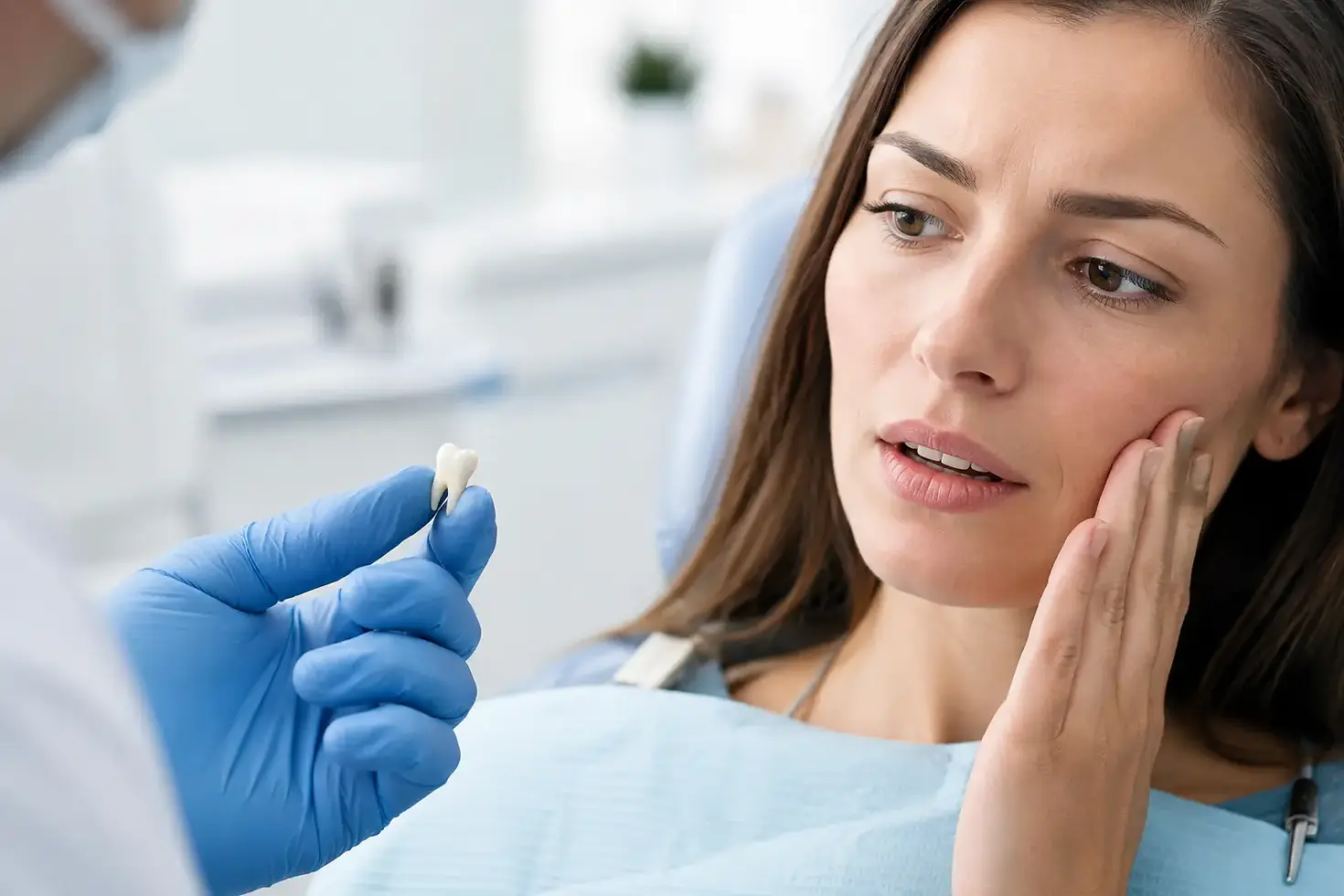
Knocked Out Tooth Treatment After an Accident

A tooth can be knocked out in seconds during a fall, sports injury, bike accident, or unexpected impact. Knocked out tooth treatment is time-sensitive, but the right actions before you reach a dentist may give a permanent tooth the best chance of being saved.
Stay calm, find the tooth if you can, and contact an emergency dentist right away. The goal is simple: protect the tooth, control bleeding, and get professional care as quickly as possible.
First Steps for Knocked Out Tooth Treatment
Start by locating the tooth. Pick it up only by the crown - the white chewing surface you normally see in the mouth. Do not touch the root. The root contains delicate cells that help a dentist reattach the tooth, and rubbing or scraping it can damage them.
If the tooth is dirty, rinse it gently for a few seconds with milk, saline solution, or clean running water. Do not scrub it, use soap, wrap it in a tissue, or disinfect it with alcohol or peroxide. Those common instincts can reduce the chances of successful treatment.
If it is a permanent tooth and the person is alert and able to cooperate, gently place the tooth back into its socket. Make sure it faces the correct direction, then have the person bite softly on clean gauze or a folded cloth to hold it in place. Do not force it into the socket if it will not go in easily.
When reinserting the tooth is not possible, keep it moist. The best options are placing it in a container of milk or saline solution. A person who is old enough not to swallow the tooth may also hold it inside the cheek. Do not store the tooth in plain water unless no other option is available, and never let it dry out.
Call an emergency dental office while you are managing the injury. Ideally, a knocked-out permanent tooth should be treated within 30 to 60 minutes. Faster care generally improves the likelihood that the tooth can be stabilized and preserved.
Control Bleeding and Protect the Injury
A knocked-out tooth can cause bleeding from the socket, lips, gums, or tongue. Place clean gauze over the socket and have the patient apply gentle, steady pressure. A cold compress on the outside of the face can help limit swelling and make the area more comfortable.
Avoid aspirin if there is active bleeding, since it may make bleeding worse. For many patients, acetaminophen or ibuprofen may be appropriate for pain relief when used as directed, but a dental team can help guide you based on the patient’s health history and medications.
Do not eat hard foods, poke at the socket, or rinse aggressively. If the tooth has been placed back in the mouth, avoid chewing on it. The tooth needs to remain as stable as possible until a dentist can assess the injury.
A dental emergency is not always the only concern after an accident. Seek urgent medical care or call emergency services if there is loss of consciousness, vomiting, confusion, severe facial swelling, difficulty breathing, uncontrolled bleeding, or concern for a head, neck, or jaw injury.
A Baby Tooth Needs Different Care
Do not put a knocked-out baby tooth back into the socket. Reimplanting a primary tooth can harm the developing permanent tooth underneath it. Save the tooth if possible and contact a dentist for advice, especially if the child has pain, a deep cut, or a suspected jaw injury.
Even when a baby tooth cannot be replaced, prompt dental care still matters. A dentist can evaluate the gums, check for other trauma, and discuss whether space needs to be monitored as the child grows.
What Happens at the Emergency Dental Visit?
Emergency care begins with an exam and, when appropriate, digital X-rays. Your dentist will check the tooth, socket, neighboring teeth, gums, and jawbone. Dental trauma can involve more than the tooth that came out, including fractures, loosened teeth, root damage, or injuries that are not obvious at first.
If the tooth has been replanted or can still be replanted, the dentist may gently reposition it and secure it with a small flexible splint attached to nearby teeth. This stabilization gives the tissues time to heal while allowing the tooth to stay in a natural position.
The next steps depend on several factors: how long the tooth was out of the mouth, how it was stored, whether the root is fully developed, and the extent of damage to the tooth or bone. Some teeth require root canal treatment after the injury. Others may need additional monitoring before a final decision is made.
That uncertainty can be frustrating, especially when you want an immediate answer. Still, early treatment creates more options. Even if a tooth cannot be saved, an emergency dentist can relieve discomfort, protect the area, and explain replacement choices such as a bridge, implant, or other restoration when the time is right.
What Not to Do After a Tooth Is Knocked Out
In a stressful moment, a few well-meaning actions can make treatment harder. Do not handle the root, scrub the tooth clean, let it dry on a counter, or wrap it in dry gauze. Do not delay care because the bleeding seems minor or the pain has eased.
It is also best not to assume a tooth is gone for good if you cannot find it immediately. A dentist may need to confirm that it was not pushed into the gum or inhaled. If there is any possibility the tooth was swallowed or inhaled, tell the medical or dental team.
Planning for the Days After Treatment
After emergency treatment, follow-up appointments are part of protecting the result. Your dentist may recommend a soft-food diet, careful brushing around the injured area, and a medicated rinse if appropriate. You may also need periodic X-rays to check the root, bone, and surrounding tissues.
Watch for increasing pain, swelling, fever, a loose splint, a change in tooth color, or drainage from the gums. These do not always mean the tooth will be lost, but they do require a prompt call to the dental office.
For Orlando families, workers, and visitors, an accident can quickly disrupt an already packed day. Vineland Modern Dentistry provides emergency dental exams designed to help patients get clear answers and timely treatment without adding unnecessary stress to the situation.
Preventing Another Dental Trauma
Some accidents cannot be predicted, but protection can lower the risk. A custom mouthguard is particularly valuable for contact sports, skateboarding, cycling, and activities with a risk of falls or impact. Children and adults who grind their teeth may also benefit from a nightguard, although it serves a different purpose than an athletic mouthguard.
If a tooth was knocked out because of a fall, loose rug, workplace incident, or sports collision, consider what can make the next incident less likely. That may mean wearing protective gear, updating a mouthguard, or addressing a balance or vision concern with the appropriate health professional.
The most useful thing to remember is that minutes matter. Keep the tooth moist, handle it by the crown, and call for emergency dental care immediately. Quick action does not guarantee every tooth can be saved, but it gives you and your dentist the strongest possible starting point.


Comments